
 Search

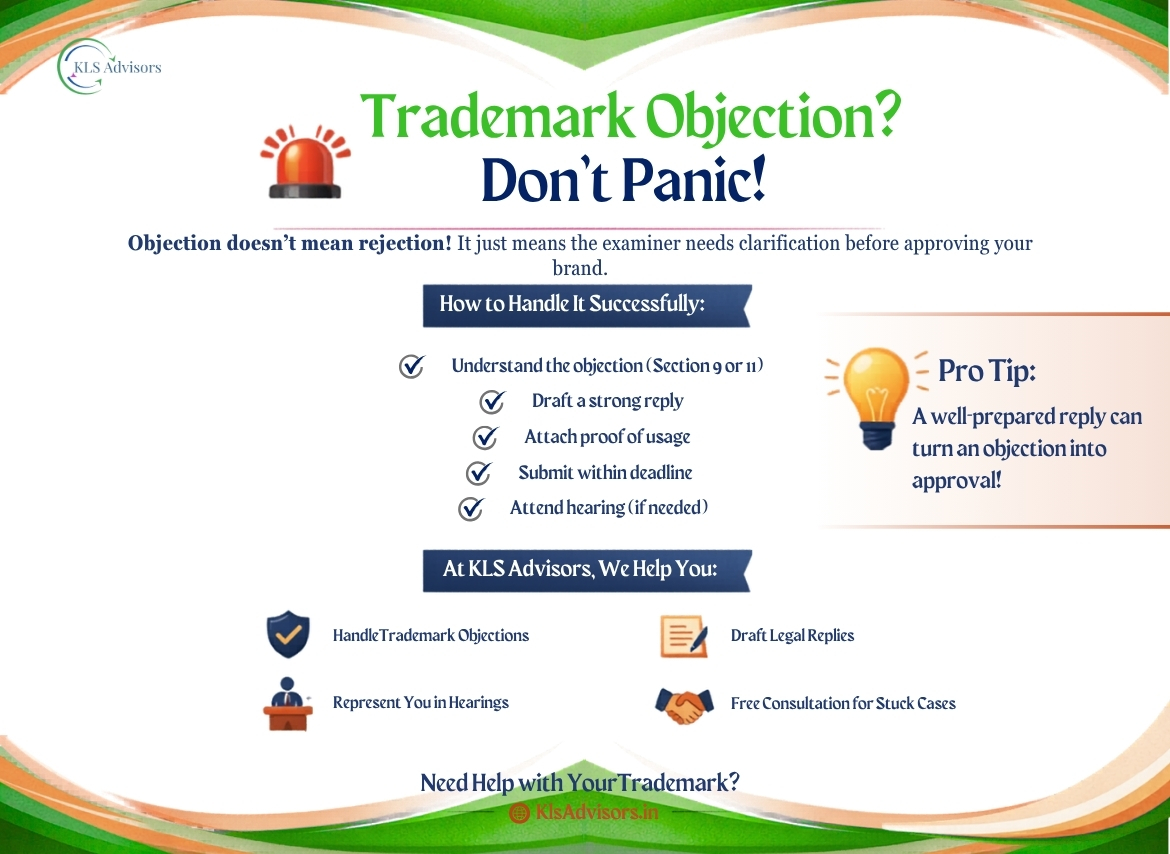
Trademark registration is a crucial step in protecting your brand identity. However, many applicants in India face trademark objections during the registration process. Receiving an objection does not mean rejection—it simply means the examiner has raised concerns that need clarification or correction.
Understanding how to respond to trademark objections and attend hearings effectively can significantly improve your chances of approval. In this comprehensive guide, we will explain everything you need to know about handling trademark objections and hearings in India.
What is a Trademark Objection?
A trademark objection is raised when the trademark examiner finds issues in your application during the examination stage. This is done by the Controller General of Patents, Designs and Trade Marks, which operates under the Ministry of Commerce and Industry.
The objection is communicated through an Examination Report, which outlines the reasons why your trademark may not be accepted.
Common Reasons for Trademark Objections in India
Trademark objections are usually raised under specific legal provisions of the Trade Marks Act, 1999.
1. Lack of Distinctiveness (Section 9)
If your trademark is too generic, descriptive, or commonly used, it may not qualify for protection.
Examples:
- “Best Quality Shoes” for footwear
- “Fresh Milk” for dairy products
Such terms do not distinguish your brand from others.
2. Similarity with Existing Trademark (Section 11)
If your trademark is similar to an already registered or applied mark, it may be objected to.
This includes:
- Similar spelling
- Similar pronunciation
- Similar meaning
Even minor variations may not be sufficient to avoid confusion.
3. Use of Common or Generic Terms
Generic words that are widely used in the industry are difficult to protect legally.
4. Incorrect Trademark Class
Filing under the wrong class can result in objections.
5. Improper Documentation
Missing or incorrect documents can also trigger objections.
6. Deceptive or Misleading Marks
Marks that may mislead consumers about quality, origin, or nature of goods can be objected to.
Trademark Objection vs Trademark Rejection
It is important to understand the difference:
- Trademark Objection: You get a chance to respond and justify your mark
- Trademark Rejection: Application is refused after unsatisfactory response
An objection is not the end—it is an opportunity to defend your trademark.
Step-by-Step Process to Handle Trademark Objection
Handling objections properly requires a strategic and well-drafted response.
Step 1: Analyze the Examination Report
Carefully read the examination report to understand:
- Legal grounds of objection
- Sections applied (Section 9 or 11)
- Examiner’s remarks
Step 2: Prepare a Strong Reply
A well-drafted reply is the most critical part of the process.
Key Elements of a Trademark Reply
- Clear explanation of your trademark
- Legal justification
- Supporting case laws (if applicable)
- Proof of usage (if already in use)
Step 3: Attach Supporting Documents
Strong evidence can significantly improve your chances.
Examples of Supporting Documents
- Logo and brand usage samples
- Invoices and bills
- Website and social media presence
- Advertising materials
Step 4: File the Reply Online
The reply must be submitted through the official trademark portal within the specified time.
Step 5: Wait for Examiner’s Decision
After submission, the examiner may:
- Accept the trademark
- Call for a hearing
- Reject the application
How to Handle Trademark Hearings in India
If the examiner is not satisfied with your reply, a hearing is scheduled.
What is a Trademark Hearing?
A trademark hearing is an opportunity to present your case before the trademark officer and justify your application.
When is a Hearing Required?
A hearing is scheduled when:
- The reply is not convincing
- Additional clarification is required
- The examiner needs oral arguments
Preparation for Trademark Hearing
Proper preparation is essential for success.
1. Understand Your Case
Review:
- Examination report
- Reply submitted
- Grounds of objection
2. Prepare Legal Arguments
Focus on:
- Distinctiveness of your mark
- Differences from existing trademarks
- Market presence and brand recognition
3. Gather Evidence
Bring supporting documents such as:
- Business registration documents
- Trademark usage proof
- Marketing materials
4. Hire a Professional
Trademark hearings involve legal arguments, so professional assistance is highly recommended.
What Happens During the Hearing?
- You (or your representative) present arguments
- The examiner may ask questions
- Clarifications are provided
- Final decision is reserved or announced
Possible Outcomes of Hearing
- Accepted: Trademark proceeds for publication
- Refused: Application is rejected
- Adjournment: Another hearing may be scheduled
Tips to Successfully Handle Trademark Objections
Here are expert tips to improve your chances:
1. Choose a Strong Trademark
Avoid generic or descriptive names. Go for unique and distinctive branding.
2. Conduct Trademark Search
Always perform a search before applying to avoid conflicts.
3. Respond Within Deadline
Failure to respond on time may lead to abandonment.
4. Use Legal Language
Your reply should be professionally drafted with proper legal reasoning.
5. Provide Evidence of Use
If your brand is already in use, submit proof to strengthen your case.
6. Seek Expert Assistance
Professional guidance can make a significant difference in complex cases.
Common Mistakes to Avoid
- Ignoring the examination report
- Submitting incomplete replies
- Missing deadlines
- Using weak or generic brand names
- Not attending hearings
Avoiding these mistakes can greatly increase approval chances.
How KLS Advisors Can Help
Handling trademark objections and hearings requires expertise in legal drafting, documentation, and representation.
KLS Advisors offers:
- Trademark Registration
- Objection Reply Filing
- Hearing Representation
- Legal Consultation (Free for objection/hearing cases)
Our experienced professionals help you:
- Draft strong replies
- Prepare legal arguments
- Represent your case in hearings
- Improve chances of approval
Visit https://klsadvisors.in/ to get expert assistance today.
Follow KLS Advisors
Stay updated with legal insights and business tips:
Instagram
https://www.instagram.com/kls.advisors
Facebook
https://www.facebook.com/people/KLS-Advisors/61577618780874
YouTube
https://www.youtube.com/@kls.advisors
LinkedIn
http://www.linkedin.com/company/klscs
Frequently Asked Questions (FAQ)
1. What should I do after receiving a trademark objection?
You should carefully review the examination report and file a reply within the prescribed time with proper legal justification and supporting documents.
2. What is the time limit to respond to a trademark objection?
Generally, you must respond within 30 days from the date of the examination report.
3. Can a trademark be approved after objection?
Yes. Many trademarks are approved after submitting a proper reply or attending a hearing.
4. What happens if I don’t respond to the objection?
If no reply is filed, the application may be marked as abandoned.
5. Is it necessary to attend a trademark hearing?
If a hearing is scheduled, attending (personally or through a professional) is important to defend your application.
6. Can I file a trademark reply myself?
Yes, but it is recommended to seek professional help for better chances of success.
7. How long does the trademark objection process take?
It may take a few weeks to months depending on the case and response.
8. What are the chances of success after a hearing?
Success depends on the strength of your trademark, legal arguments, and supporting evidence.
Final Thoughts
Trademark objections are a common part of the registration process in India. Instead of viewing them as setbacks, consider them an opportunity to strengthen your application.
With proper legal strategy, timely response, and professional guidance, you can successfully overcome objections and secure your trademark rights.
If your trademark is stuck in objection or hearing, KLS Advisors is here to help with expert consultation and end-to-end support. 👉 Visit https://klsadvisors.in/ and protect your brand today.
 Post Tags: