

 Search

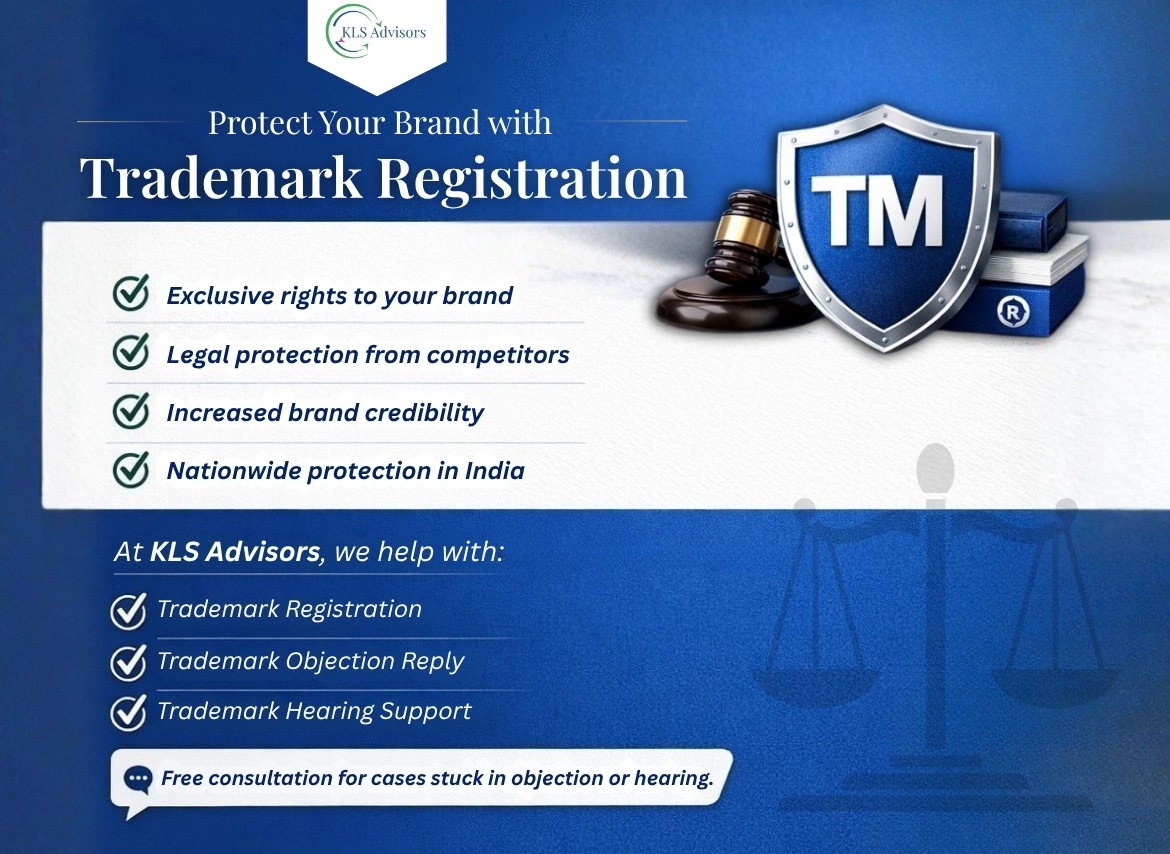
Building a strong brand is essential for any business. Whether you are running a startup, an e-commerce store, or a growing company, your brand name, logo, slogan, or symbol represents your identity in the market. Protecting that identity is crucial, and this is where trademark registration becomes important.
Trademark registration in India provides legal protection for your brand and prevents others from using similar names or logos that could confuse customers. It also strengthens your brand credibility and gives you exclusive rights over your mark.
In this detailed guide, we explain the step-by-step process of trademark registration in India for 2026, the benefits of registering a trademark, required documents, costs, and common issues such as trademark objections and hearings.
What is a Trademark?
A trademark is a unique symbol, word, phrase, logo, design, or combination of these elements used to identify and distinguish the goods or services of one business from others.
Examples of trademarks include:
- Brand names
- Company logos
- Taglines and slogans
- Product names
- Unique symbols or designs
In India, trademarks are governed by the Trade Marks Act, 1999 and administered by the Controller General of Patents, Designs and Trade Marks.
Once registered, a trademark provides exclusive rights to the owner and legal protection against unauthorized use.
Why Trademark Registration is Important
Many businesses start using a brand name without registering it. However, this can lead to serious legal problems if another company registers a similar mark.
Here are some important benefits of trademark registration.
1. Exclusive Rights
Trademark registration gives the owner exclusive rights to use the mark for specific goods or services.
2. Legal Protection
A registered trademark protects your brand from infringement and misuse by competitors.
3. Brand Recognition
Customers recognize and trust registered brands more easily.
4. Business Asset
A trademark becomes a valuable intellectual property asset that can be licensed, sold, or franchised.
5. Nationwide Protection
Registration provides legal protection across India.
6. Prevents Brand Copying
Competitors cannot legally use identical or confusingly similar trademarks.
Types of Trademarks in India
Businesses can register different types of trademarks depending on their branding strategy.
Word Mark
A word mark protects the brand name itself.
Example: company name or product name.
Logo Mark
Protects the visual symbol or logo used by a company.
Tagline or Slogan
Protects marketing phrases or slogans.
Service Mark
Used by service providers such as consultants, advisors, and agencies.
Collective Mark
Used by associations or groups to represent collective membership.
Choosing the correct type of trademark is important for effective brand protection.
Who Can Apply for Trademark Registration?
Trademark registration can be applied by:
- Individuals
- Startups
- Companies
- Partnership firms
- LLPs
- NGOs
- Trusts and societies
Any person or entity using or planning to use a brand in business can apply for trademark protection.
Step-by-Step Process of Trademark Registration in India (2026)
The trademark registration process involves several stages. Understanding each step helps ensure a smooth application.
Step 1: Trademark Search
Before filing a trademark application, it is important to conduct a trademark search.
This search helps determine whether a similar trademark already exists.
A proper trademark search helps avoid rejection and legal disputes later.
A professional advisor can conduct a detailed search in the official database of the Controller General of Patents, Designs and Trade Marks.
Step 2: Choose the Correct Trademark Class
Trademarks are categorized into different classes based on the type of goods or services.
India follows the Nice Classification system, which includes 45 classes.
- Classes 1–34: Goods
- Classes 35–45: Services
Selecting the correct class is crucial because trademark protection applies only to the selected class.
Step 3: Filing the Trademark Application
Once the search is complete, the next step is filing the trademark application.
The application is submitted online through the official trademark portal.
Important details included in the application:
- Applicant name
- Business details
- Trademark logo or word mark
- Class of goods or services
- Date of trademark usage
After filing the application, the applicant receives an acknowledgment number, which can be used to track the application status.
At this stage, the symbol ™ can be used with the brand.
Step 4: Examination by Trademark Office
After submission, the trademark application is examined by the trademark office.
The examiner reviews the application to ensure that:
- The trademark is unique
- It does not conflict with existing marks
- It complies with legal requirements
If the examiner finds issues, they may issue an examination report.
Step 5: Trademark Objection (If Any)
Sometimes the trademark office raises objections during the examination process.
Common reasons for objections include:
- Similarity with existing trademarks
- Lack of distinctiveness
- Descriptive words in the trademark
In such cases, the applicant must file a reply to the examination report explaining why the trademark should be approved.
Professional legal assistance can significantly improve the chances of successful approval.
Step 6: Trademark Hearing (If Required)
If the examiner is not satisfied with the reply, a trademark hearing may be scheduled.
During the hearing, the applicant or their legal representative presents arguments supporting the trademark application.
This stage is important for resolving objections and securing approval.
Step 7: Publication in Trademark Journal
If the trademark passes examination, it is published in the official trademark journal.
This allows the public to review the trademark and raise objections if necessary.
The opposition period usually lasts four months.
If no opposition is filed during this period, the application proceeds to registration.
Step 8: Trademark Registration Certificate
If there are no objections or oppositions, the trademark office issues a Trademark Registration Certificate.
Once registered, the trademark owner can use the ® symbol with their brand.
The trademark is then legally protected across India.
Trademark Validity and Renewal
A registered trademark in India is valid for 10 years from the date of registration.
After 10 years, the trademark can be renewed indefinitely by paying the renewal fee.
Timely renewal ensures continuous protection for your brand.
Documents Required for Trademark Registration
The following documents are typically required when filing a trademark application:
- Applicant identity proof (PAN / Aadhaar)
- Address proof
- Logo or trademark image
- Business registration certificate (if applicable)
- Power of Attorney (if filed through an attorney)
Having proper documentation helps avoid delays in the application process.
Common Mistakes to Avoid in Trademark Registration
Many trademark applications face delays or rejection due to avoidable mistakes.
Choosing a Generic Name
Generic or descriptive words are difficult to register.
Not Conducting a Trademark Search
Skipping a search increases the risk of rejection.
Filing in the Wrong Class
Incorrect class selection can limit trademark protection.
Ignoring Trademark Objections
Failure to respond properly to objections can lead to application rejection.
Professional guidance helps avoid these issues.
Trademark Objection and Hearing Support
Trademark objections and hearings are common challenges during the registration process.
Professional advisors can help with:
- Drafting effective objection replies
- Preparing legal arguments
- Representing applicants during hearings
- Resolving trademark conflicts
Expert assistance significantly increases the chances of successful registration.
How KLS Advisors Can Help
Trademark registration involves legal procedures, documentation, and communication with the trademark office.
KLS Advisors provides comprehensive trademark services for businesses and startups across India.
Our services include:
- Trademark Search and Filing
- Trademark Registration
- Trademark Objection Handling
- Trademark Hearing Representation
- Brand Protection Strategy
We also offer free consultation for cases stuck in trademark objection or hearing stages.
Our experienced legal professionals help ensure that your trademark registration process is smooth and successful.
Visit https://klsadvisors.in/ to learn more about our services.
Follow KLS Advisors on Social Media
Stay updated with legal tips, trademark updates, and startup guidance.
Instagram
https://www.instagram.com/kls.advisors
Facebook
https://www.facebook.com/people/KLS-Advisors/61577618780874
YouTube
https://www.youtube.com/@kls.advisors
LinkedIn
http://www.linkedin.com/company/klscs
Frequently Asked Questions (FAQ)
1. How long does trademark registration take in India?
Trademark registration usually takes 6 to 12 months, depending on objections, opposition, and examination processes.
2. Can I use my trademark before registration?
Yes. You can use the ™ symbol after filing the trademark application.
The ® symbol can only be used after the trademark is officially registered.
3. What is the cost of trademark registration in India?
Government fees vary depending on the applicant type.
Individuals and startups typically pay lower fees compared to companies.
Professional fees may also apply if filing through a legal advisor.
4. What happens if someone opposes my trademark?
If someone files an opposition during the journal publication stage, the applicant must respond with legal arguments.
The trademark office will review both sides before making a decision.
5. Can a trademark be renewed?
Yes. A registered trademark is valid for 10 years and can be renewed indefinitely by paying renewal fees.
6. Is trademark registration mandatory?
Trademark registration is not legally mandatory, but it is strongly recommended because it provides legal protection for your brand.
7. Can foreign companies register trademarks in India?
Yes. Foreign companies can register trademarks in India if they plan to conduct business or protect their brand in the Indian market.
8. What happens if someone uses my trademark without permission?
If your trademark is registered, you can take legal action against the infringer and claim damages under the Trade Marks Act, 1999.
Final Thoughts
Trademark registration is one of the most important steps in building and protecting a brand. A registered trademark not only protects your business identity but also strengthens brand value and customer trust.
By following the correct process and obtaining professional guidance, businesses can avoid common mistakes and secure strong trademark protection.
If you are planning to register a trademark or need help with trademark objections or hearings, the experts at KLS Advisors can provide professional assistance and guidance. Visit https://klsadvisors.in/ today to start protecting your brand.
 Post Tags: