

 Search

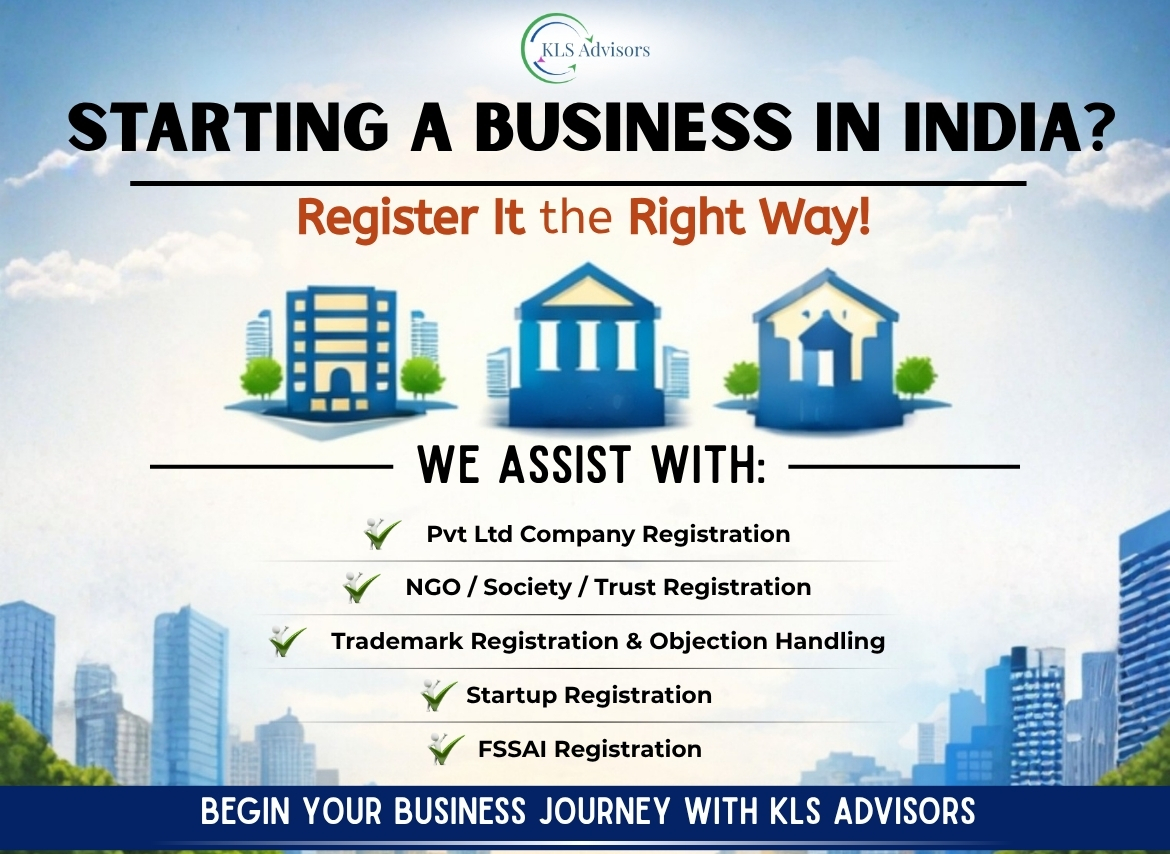
Starting a business or a non-profit organization in India requires proper legal registration. Whether you are planning to launch a startup, build a private company, or create a charitable organization, choosing the right legal structure is one of the most important decisions you will make.
Business registration not only provides legal recognition but also helps build credibility with customers, investors, and government authorities. In India, entrepreneurs and social organizations typically choose between structures such as Private Limited Company, NGO, Society, or Trust, depending on their goals and operational model.
In this comprehensive guide, we will explain the different types of registrations available in India, their benefits, required documents, and the registration process.
Why Business Registration is Important in India
Registering a business or organization ensures that it operates legally and follows government regulations. Many startups begin informally, but formal registration provides several advantages.
Key Benefits of Business Registration
1. Legal Recognition
A registered business becomes a separate legal entity that can operate officially in India.
2. Limited Liability Protection
In structures like a Private Limited Company, the personal assets of owners are protected from business liabilities.
3. Business Credibility
Registered organizations are more trusted by clients, vendors, and investors.
4. Access to Funding
Banks, venture capital firms, and government schemes generally require registered businesses.
5. Tax Benefits
Certain structures such as NGOs and charitable trusts may receive tax exemptions.
6. Easier Business Expansion
Registration makes it easier to enter contracts, hire employees, and grow the organization.
Business registration in India is regulated by the Ministry of Corporate Affairs, which oversees company formation and compliance under the Companies Act, 2013.
Types of Business and Organization Registration in India
Entrepreneurs and social workers typically choose from the following legal structures:
- Private Limited Company
- NGO / Section 8 Company
- Society
- Trust
Each structure has its own legal framework, requirements, and benefits.
Private Limited Company Registration in India
A Private Limited Company is one of the most popular business structures for startups and growing businesses in India.
This type of company is privately held by shareholders and offers limited liability protection.
Key Features of a Private Limited Company
- Separate legal entity from its owners
- Limited liability for shareholders
- Ability to raise funds from investors
- Perpetual succession (business continues even if owners change)
- Better credibility with banks and clients
Because of these benefits, most startups and growing businesses prefer this structure.
Requirements for Pvt Ltd Company Registration
To register a Private Limited Company in India, you need:
- Minimum 2 Directors
- Minimum 2 Shareholders
- Registered office address in India
- Director Identification Number (DIN)
- Digital Signature Certificate (DSC)
Step-by-Step Registration Process
Step 1: Obtain Digital Signature Certificate (DSC)
Since company registration is done online, directors must obtain a digital signature to sign documents electronically.
Step 2: Apply for Director Identification Number (DIN)
DIN is a unique identification number required for every director.
Step 3: Reserve Company Name
The proposed company name must be approved by the Ministry of Corporate Affairs.
Step 4: Submit Incorporation Documents
Documents such as Memorandum of Association (MOA) and Articles of Association (AOA) are filed with MCA.
Step 5: Certificate of Incorporation
After approval, the Registrar of Companies issues the Certificate of Incorporation, officially creating the company.
NGO Registration in India
An NGO (Non-Governmental Organization) is formed to work for social, educational, environmental, or charitable causes.
In India, NGOs can be registered as:
- Trust
- Society
- Section 8 Company
NGOs often collaborate with government programs and development agencies.
Many NGOs also register on the portal of NITI Aayog to receive recognition and participate in government initiatives.
Benefits of NGO Registration
- Ability to receive grants and donations
- Eligibility for tax exemptions
- Increased credibility among donors
- Legal protection for founders
NGOs that receive foreign donations must comply with the Foreign Contribution Regulation Act, 2010.
Society Registration in India
A Society is commonly created for charitable, cultural, educational, or community-related activities.
Societies are governed by the Societies Registration Act, 1860.
Features of a Society
- Minimum 7 members required
- Managed by a governing body
- Suitable for non-profit activities
- Democratic management structure
Documents Required for Society Registration
- Memorandum of Association (MOA)
- Rules and regulations of the society
- Address proof of registered office
- Identity proof of members
Registration Process
- Choose a unique name
- Prepare Memorandum of Association
- Draft rules and regulations
- Submit application to Registrar of Societies
- Obtain registration certificate
Societies are widely used for educational institutions, community groups, and cultural organizations.
Trust Registration in India
A Trust is another popular structure for charitable and religious purposes.
Trusts are created when a person transfers property to trustees for the benefit of beneficiaries.
Trusts are governed by the Indian Trusts Act, 1882.
Key Components of a Trust
- Settlor (person who creates the trust)
- Trustees (people who manage the trust)
- Beneficiaries (people who benefit from the trust)
Benefits of Trust Registration
- Simple formation process
- Ideal for charitable activities
- Long-term asset protection
- Tax exemption opportunities
Registration Process
- Draft Trust Deed
- Determine trustees and beneficiaries
- Pay stamp duty
- Register trust deed with local registrar
Once registered, the trust becomes a legally recognized entity.
How to Choose the Right Registration Structure
Selecting the right structure depends on your goals.
| Structure | Best For |
| Private Limited Company | Startups and profit businesses |
| NGO / Section 8 Company | Social and charitable work |
| Society | Community and educational organizations |
| Trust | Charitable foundations |
Factors to consider when choosing a structure include:
- Nature of activities
- Funding requirements
- Compliance obligations
- Long-term growth plans
Professional legal guidance can help ensure that you select the most suitable structure.
How KLS Advisors Can Help
Registering a business or non-profit organization involves multiple legal procedures, government filings, and compliance requirements.
KLS Advisors provides professional assistance for entrepreneurs, startups, and organizations looking to establish their presence in India.
Our services include:
- Business Registration (Private Limited Company, NGO, Society, Trust)
- Trademark Registration and Objection Handling
- Recovery of Shares from IEPF
- FEMA Compliance including FDI and Compounding
With experienced legal professionals and corporate advisors, KLS Advisors helps clients navigate complex regulatory processes smoothly.
For more information, visit https://klsadvisors.in/.
Follow KLS Advisors on Social Media
Stay updated with business compliance updates, legal tips, and startup guidance.
Instagram
https://www.instagram.com/kls.advisors
Facebook
https://www.facebook.com/people/KLS-Advisors/61577618780874
YouTube
https://www.youtube.com/@kls.advisors
LinkedIn
http://www.linkedin.com/company/klscs
Frequently Asked Questions (FAQ)
1. What is the best business structure for startups in India?
Most startups prefer Private Limited Company registration because it offers limited liability protection and makes it easier to raise investment from venture capitalists and angel investors.
2. How long does business registration take in India?
The time required depends on the type of registration.
- Private Limited Company: 7–10 working days
- Society: 10–15 days
- Trust: 5–7 days
Processing time may vary based on documentation and government approvals.
3. Can one person start a company in India?
Yes. A One Person Company (OPC) allows a single individual to start a company with limited liability protection.
4. What is the difference between a Trust and a Society?
A Trust is managed by trustees and generally has a simpler structure.
A Society has a governing body and democratic management system.
Societies are often preferred for community organizations, while trusts are commonly used for charitable foundations.
5. Do NGOs get tax benefits in India?
Yes. Registered NGOs can apply for tax exemptions under the Income Tax Act, allowing donors to receive tax deductions on contributions.
6. Is trademark registration necessary for businesses?
Trademark registration protects your brand name, logo, and identity from unauthorized use. It helps build brand value and legal protection in the market.
7. What documents are required for company registration?
Typical documents include:
- PAN and Aadhaar of directors
- Address proof
- Passport-size photographs
- Registered office proof
- Memorandum and Articles of Association
8. Can foreign investors start a company in India?
Yes. Foreign investors can start businesses in India through Foreign Direct Investment (FDI) under regulations governed by the Foreign Exchange Management Act (FEMA).
Final Thoughts
Registering your business or organization is the first step toward building a legally compliant and successful venture in India. Whether you want to launch a startup, create a non-profit organization, or establish a charitable foundation, selecting the right registration structure is essential.
Professional assistance can simplify the process, ensure compliance, and help avoid costly mistakes.
If you are planning to register a Private Limited Company, NGO, Society, or Trust, the experts at KLS Advisors can guide you through the entire process and provide reliable legal support.
Visit https://klsadvisors.in/ to get started with your business registration today.
 Post Tags: